Violence Erupts Across Mexico Following El Mencho’s Death: A National Crisis
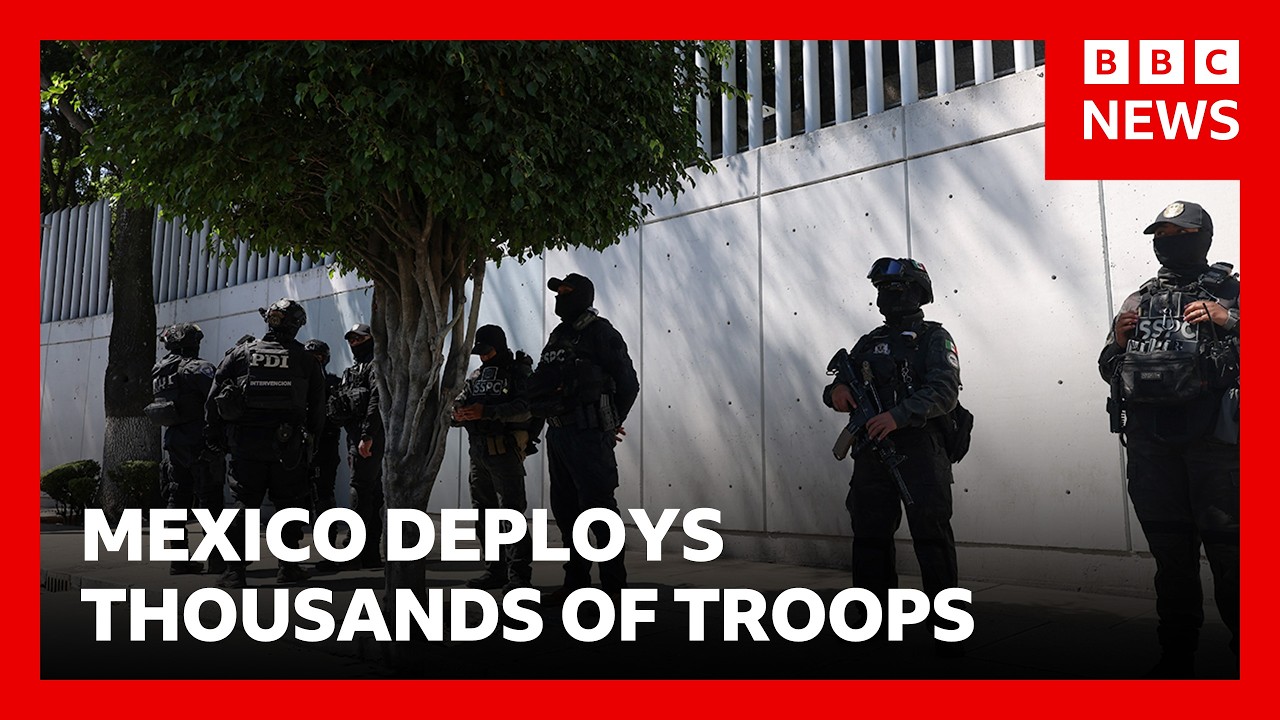
The recent death of Mexico’s most infamous drug lord, Nemesio Oseguera Cervantes—commonly known as El Mencho—has sparked a wave of violence across the nation. In a targeted operation executed by Mexican special forces, El Mencho was killed, igniting a violent backlash from his followers in the Halisco New Generation Cartel (CJNG). This unprecedented surge in violence has prompted the Mexican government to deploy thousands of troops in a bid to restore order amidst the chaos.
Reports indicate that violence erupted in a staggering 20 of Mexico’s 32 states within hours of El Mencho’s death. Guadalajara, a city slated to host this summer’s FIFA World Cup, is one of the areas experiencing unrest. Foot soldiers of the CJNG went on a rampage, burning vehicles, blocking roads, and spreading terror among the populace. Such incidents paint a bleak picture of security in a nation already grappling with a long history of cartel-related violence.
El Mencho, who once began his career as a petty drug dealer, transformed into one of Mexico’s most wanted criminals, with a reward of $15 million placed on his head. His rise and subsequent death symbolize a critical moment in the battle against drug cartels that have long plagued the country. However, his death has also underscored just how deeply entrenched these criminal organizations remain within Mexican society.
President Claudia Sheinbaum sought to reassure the public by framing El Mencho’s elimination as a significant victory. Yet, as she acknowledged the surge in violence, the government’s claims of restoring normality rang hollow to many. “Today there is more calm,” Sheinbaum asserted, pointing to the presence of armed forces and a coordinated security cabinet. Nevertheless, fear remains palpable among residents, particularly in cities like Guadalajara. With the World Cup approaching, the need for effective security measures is paramount. Travelers found themselves stranded in airports, facing the stark reality of violence outside.
In tandem with domestic responses, the White House commended the successful operation, acknowledging the role of U.S. intelligence in El Mencho’s downfall. This development has been framed as a victory for both nations but has not alleviated apprehensions about violence spilling over into American borders. As discussions of unilateral U.S. military action to combat drug trafficking resurface, the implications of Mexico’s internal strife are profound.
Despite the chaos currently enveloping Mexico, government officials remain optimistic that ridging the cartel’s leadership will ultimately enhance safety. The CJNG continues to exert control over vast regions of the country, primarily fueled by the lucrative fentanyl trade that generates billions annually. President Joe Biden’s focus on immigration and drug trafficking in relation to Mexico has intensified scrutiny on how effectively the country can manage these crises.
As the days unfold, the narrative of El Mencho’s death dances between triumph and tragedy. Even as officials attempt to project an image of control and normalcy, communities living in the shadow of cartel influence grapple with a harsh reality. There’s a pervasive anxiety about potential retaliation from a cartel that has historically demonstrated a willingness to lash out against authorities and civilians alike.
Citizens endure a harrowing reality; violence has an insidious way of lingering long after the headlines fade. For those in the most affected areas, the promise of security offered by the government feels precarious. The memories of chaos remain vivid, casting a long shadow over the hopeful anticipation of international events such as the World Cup.
As Mexico stands at a crossroads, the conflict against its drug cartels is far from over. The death of a single leader does not dismantle an entire network; rather, it highlights the fragility of security in a nation grappling with deeply-rooted systemic issues. The world watches closely, awaiting a resolution that seems increasingly elusive amidst the terrain of violence and fear.